


Screws are a large family of mechanical fasteners with threaded shafts designed to be screwed into parts. This includes wood screws and self-jacking screws, which have tapered shafts with sharp threads designed to cut mating threads on fastening parts. It also includes machine screws, which are more similar to bolts, but their entire shaft is usually threaded.
Products

Identification method and precautions of terminal

Different Types of Hex Head Screws

Cage Clamp Terminal Block

Threaded countersunk steel nail

Zinc Plated Steel Sealing Screw for Electric Meter

Nylon PA66 screw terminal block
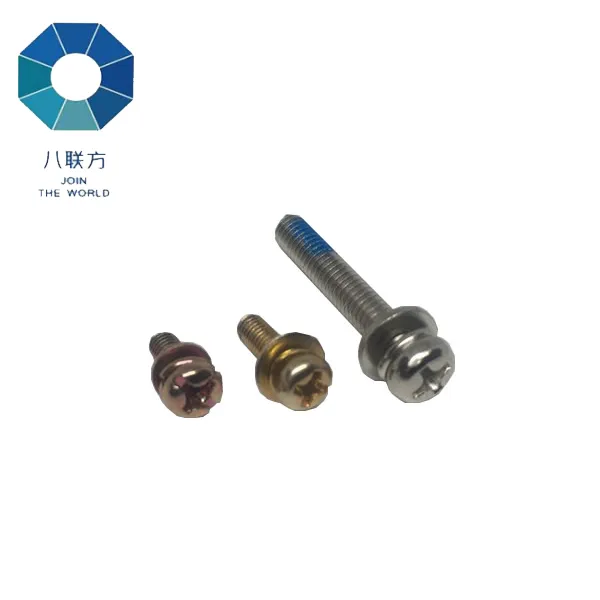
Combination Screws Advantage

Hpb 59 Brass Terminal Block
Bolts and screws are sometimes divided according to their purpose. According to these definitions, a bolt passes through an unthreaded hole in a part and is secured by a nut, while a screw mates with a threaded hole in one of the parts being fastened. In practice, this definition is not strictly applied. The term "bolt" is generally used for fasteners that are not self-tapping and only part of the shaft is threaded. Fasteners that are self-tapping or have the entire shaft threaded are often called screws.
Screws typically rely on friction at the threads to stay securely tightened. For self-tapping screws, radial expansion of the hole causes most of the friction. For machine screws, friction is primarily caused by the torque applied to the head and the axial force created by the subsequent tension in the screw combined with the compression of the part. Machine screws may alternatively or additionally be prevented from loosening using locking nuts or thread locking adhesive.
Machine screws
Machine screws have a standard thread on a parallel axis and are designed to be screwed into a threaded hole in a part. They can also be used with nuts. The most common type of machine screw is a hex screw, which is very similar to a hex bolt but without a shank. There are many types of machine screws for specific applications, often with different head shapes:
Countersunk head screw: A tapered head designed to be countersunk so that it lies flush with the surface of the part, with a.
Cap head screw: Barrel-shaped head with a socket designed to fit into a countersunk hole.
Pan head screws: domed head screws with sleeves
Flat Head Screw: A set screw that is threaded on its entire outer surface and has no head, allowing it to be screwed completely into a hole to lock the part underneath the hole.
Allen screws can come in many different Allen types. The order of the head and socket shapes given in the name may vary. Some of the most common socket types are:
Hex socket or "Allen wrench"
cross head
Thorz
rice word
Machine screws are graded according to their strength, using the same system as bolts, with the two numbers separated by a dot. The first number is the ultimate tensile strength (UTS) in MPa divided by 100, and the second number is the ratio of yield strength to UTS. Common grades are 5.8, 8.8, and 10.9. For example, a grade 8.8 screw has a UTS of 800 MPa and a yield strength of 80% of that value (640 MPa).
Self-tapping screws (including wood screws)
Self-tapping screws are a term generally used for screws that cut threads in sheet metal, although wood screws and plastic screws in general are also self-tapping screws. These types of screws typically have a sharp tip and sharp threads on a tapered shaft. They may have an unthreaded shank, like a bolt. Common types include:
wood screws
Self-tapping screws
Square Head Screws: These are large self-tapping screws with a hex head that allow for high torque during installation. Confusingly, this is very different from a carriage bolt, which is a machine screw with a domed head and square shank.