There are thousands of fasteners manufactured every day, all used for a variety of applications. Washers are one that we don't often touch on here at Wilson-Garner, but they can be an important part of ensuring secure, long-lasting connections.
Below we explore the world of washers, when they're needed, and when they're not needed.
What Are Washers and How Do They Work?
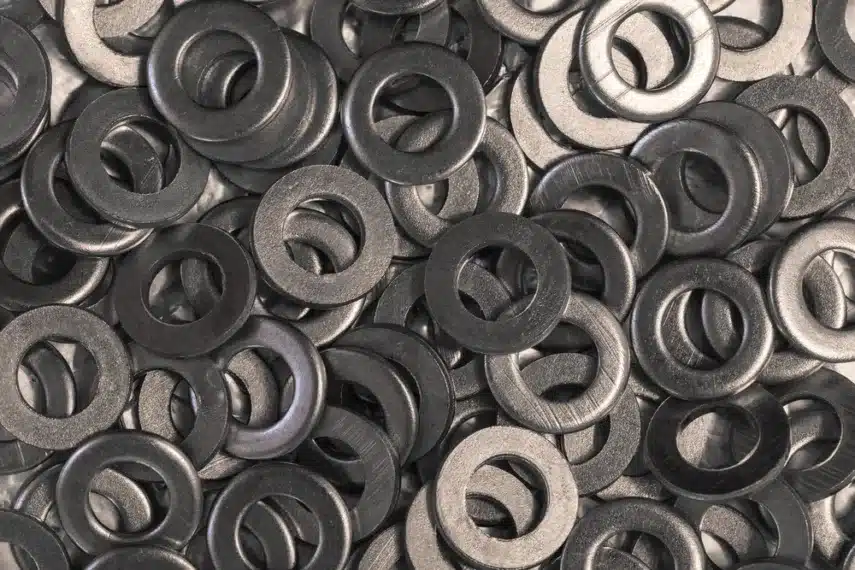
A washer is a type of fastener used to distribute the load of a threaded fastener, such as a bolt or a screw, over a larger surface area. It is typically a flat, thin, disc-shaped piece made from materials like metal, plastic, rubber, or fiber. Washers are often used in combination with nuts and bolts or screws to prevent damage to surfaces, reduce friction, and prevent loosening.
There are several types of washers, each designed for specific purposes. Some common ones are:
Flat Washers: These are simple flat washers with a hole in the center. They are used to distribute the load and prevent the fastener from digging into the material's surface.
Lock Washers: Lock washers have a design that provides resistance against loosening due to vibrations or other forces.
Spring Washers: These are curved or wavy washers that provide spring-like tension, maintaining pressure between the fastener and the material. They help compensate for loosening due to thermal expansion or vibration.
Conical Washers: Conical washers resemble a curved cone shape. They are known to provide controlled spring tension and maintain a consistent load or pressure between two surfaces.
Factors Influencing the Need for Washers
Washers are great, but they aren't always necessary. The decision to use washers depends on the specific needs and characteristics of your application. Some key factors that influence when to use washers and when not to include:
Material, of both the washer and the material being fastened.
Uneven surfaces and gaps. Using a washer can help create a more even contact between the fastener and the material.
Environmental factors like corrosivity, temperature, and vibration.
Specific application requirements. Some applications have unique requirements like thermal expansion compensation, electrical insulation, or pressure sealing.
Aesthetics. In some cases, decorative washes may be used to enhance the appearance of a fastened joint.
When to Use Washers vs. When NOT to Use Washers
All that said, washers can be useful in a number of applications but aren't necessary in all of them. And when a washer isn't necessary, it's best to avoid the additional product, time, and expense.
Here's a breakdown of when to use washers and when not to:
When to Use Washers
You need better load distribution
Your bolt and nut assembly isn't tight enough
You don't want the head of the fastener to punch through the hole
Your fastening needs to be waterproof
You need additional spacing or gap filling
When Not to Use Washers
You have uniform material; fastened components are the same material, and there are no concerns with surface damage
Your fastener has a large bearing surface
Vibration and other environmental factors aren't a concern
Your joint has limited space for a washer
You can use a Place bolt instead
A More Effective & Efficient Locking Mechanism: Place Bolts
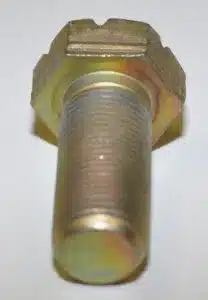
Place bolts are self-locking, free-spinning hex head bolts. Their heads are responsible for their locking action, which prevents loosening due to vibration - up to seven times that of conventional hex head cap screws.
What are we getting at here? Place bolts eliminate any need for washers, even in high-vibration environments. They lock and distribute loads on their own, so you don't need to worry about stocking, installing, and paying for washers.