

The head style of a screw is a crucial factor that significantly influences its application and performance. As a seasoned screws supplier, I've witnessed firsthand how different head styles cater to diverse needs across various industries. In this blog, I'll delve into the ways in which the head style of a screw affects its use, highlighting the unique features and applications of some common head styles.
Flat Head Screws
Flat head screws are characterized by their flat, countersunk head, which sits flush with the surface when installed. This design makes them ideal for applications where a smooth, even surface is required, such as furniture assembly, cabinetry, and electronics. The flat head allows for a clean and professional finish, minimizing the risk of snagging or catching on objects.
One of the key advantages of flat head screws is their ability to distribute pressure evenly across the surface. This reduces the likelihood of the screw pulling through the material, providing a secure and stable connection. Additionally, the flat head design makes it easier to drive the screw into the material, as the head can be easily accessed with a screwdriver or drill.
However, flat head screws may not be suitable for applications where a high degree of torque is required. The flat head provides less surface area for the screwdriver or drill to grip, which can make it more difficult to apply sufficient force. In these cases, a different head style, such as a Phillips or hex head, may be more appropriate.
Round Head Screws
Round head screws feature a rounded, domed head that protrudes above the surface when installed. This design provides a decorative element, making them a popular choice for applications where aesthetics are important, such as woodworking, metalworking, and automotive manufacturing. The round head also provides a larger surface area for the screwdriver or drill to grip, making it easier to apply torque.
One of the main advantages of round head screws is their versatility. They can be used in a wide range of applications, from light-duty to heavy-duty. The rounded head also provides a degree of protection against damage to the surface, as it is less likely to scratch or mar the material.
However, round head screws may not be suitable for applications where a flush surface is required. The protruding head can create a tripping hazard or interfere with the operation of other components. In these cases, a flat head or countersunk head screw may be more appropriate.
Pan Head Screws
Pan head screws have a flat top with a rounded edge, similar to a shallow dome. This design provides a combination of the features of flat head and round head screws, making them a versatile option for a variety of applications. The flat top provides a large surface area for the screwdriver or drill to grip, while the rounded edge allows for a smooth, even finish.
One of the advantages of pan head screws is their ability to provide a secure connection without protruding too far above the surface. This makes them suitable for applications where a flush surface is desired, but where a round head screw may be too large or a flat head screw may not provide enough torque. Pan head screws are commonly used in electronics, machinery, and automotive applications.
However, pan head screws may not be suitable for applications where a high degree of precision is required. The rounded edge can make it more difficult to align the screw with the hole, which can result in a less secure connection. In these cases, a flat head or countersunk head screw may be more appropriate.
Hexagon Socket Button Head Screw
The Hexagon Socket Button Head Screw features a cylindrical head with a hexagonal socket in the center. This design allows for the use of a hex key or Allen wrench to drive the screw, providing a high degree of torque and precision. The button head is rounded and slightly domed, providing a smooth and aesthetically pleasing finish.
One of the main advantages of hexagon socket button head screws is their ability to provide a strong and secure connection. The hexagonal socket allows for a greater amount of torque to be applied, making them suitable for applications where a high degree of strength is required. The button head also provides a flush surface, making them ideal for applications where a smooth finish is desired.
Hexagon socket button head screws are commonly used in machinery, automotive, and aerospace applications, where precision and strength are critical. They are also popular in furniture assembly and electronics, where a clean and professional appearance is important.
Standard M5 Chicago Screw
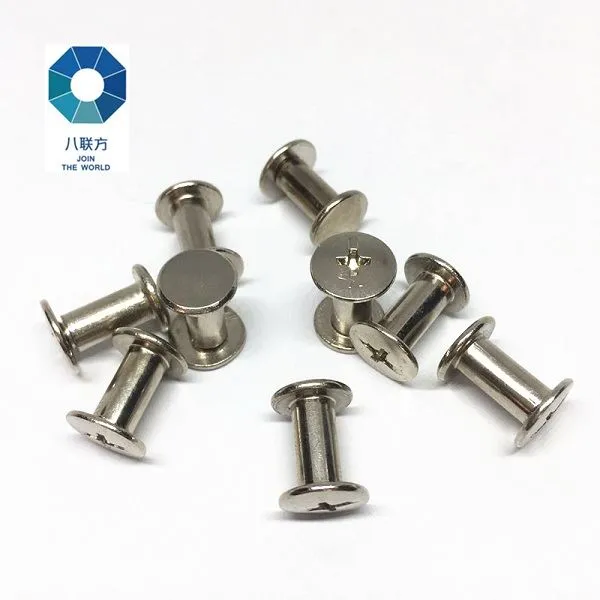
The Standard M5 Chicago Screw is a type of screw that consists of two parts: a screw and a nut. The screw has a threaded shaft and a head, while the nut has a threaded hole that matches the screw. The two parts are joined together by inserting the screw through the material and tightening the nut on the other side.
One of the main advantages of Chicago screws is their ease of installation and removal. They can be easily tightened or loosened using a screwdriver or wrench, making them ideal for applications where frequent disassembly and reassembly is required. Chicago screws are also available in a variety of sizes and finishes, making them suitable for a wide range of applications.
Chicago screws are commonly used in bookbinding, leatherworking, and jewelry making, where they provide a secure and decorative way to fasten materials together. They are also popular in industrial applications, where they are used to connect components that need to be easily removed for maintenance or repair.
Hexagon Socket Countersunk Head Screw
The Hexagon Socket Countersunk Head Screw features a hexagonal socket in the center of a countersunk head. This design allows for the use of a hex key or Allen wrench to drive the screw, providing a high degree of torque and precision. The countersunk head is designed to sit flush with the surface when installed, providing a smooth and professional finish.
One of the main advantages of hexagon socket countersunk head screws is their ability to provide a strong and secure connection while maintaining a flush surface. The hexagonal socket allows for a greater amount of torque to be applied, making them suitable for applications where a high degree of strength is required. The countersunk head also provides a clean and professional appearance, making them ideal for applications where aesthetics are important.
Hexagon socket countersunk head screws are commonly used in machinery, automotive, and aerospace applications, where precision and strength are critical. They are also popular in furniture assembly and electronics, where a smooth and professional finish is desired.
Conclusion
In conclusion, the head style of a screw plays a crucial role in its application and performance. Different head styles offer unique features and advantages, making them suitable for a wide range of applications. As a screws supplier, I understand the importance of choosing the right head style for the job. Whether you need a flat head screw for a flush surface, a round head screw for a decorative finish, or a hexagon socket button head screw for a high-strength connection, I can provide you with the right screws for your needs.

If you're interested in learning more about our screws or would like to discuss your specific requirements, please don't hesitate to contact me. I'm always happy to help and look forward to the opportunity to work with you.
References
- Machinery's Handbook, 31st Edition
- Fasteners Handbook: An Engineer's Guide to Design, Manufacturing, and Applications
- The Screw Book: A Comprehensive Guide to Screws, Bolts, and Nuts