


What Terminal Blocks Are
A terminal block is a modular, insulated block that secures two or more wires together. Factories use terminal blocks to secure and/or terminate wires.
In their most basic form, terminal blocks consist of several individual terminals which are arranged in a long strip. The terminal block is most useful for connecting wiring to ground.
There are hundreds of millions of terminal blocks in use today, with more being installed every day.
Advantages of Terminal Blocks
The biggest advantage of terminal blocks is the cost. They're cheaper compared to other types of connectors.
Terminal blocks also can be a time saver as the process to connect wires isn't as elaborate as some others are. Most well-equipped shops can connect wires using a terminal block easily just by stripping them.
Reduce Space
By investing in multi-level terminal blocks you can reduce panel space by up to 50%. That's because the multi-level blocks contain multiple levels of circuits with that single block.
Increase Safety
Terminal blocks increase safety by grounding, isolating, and protecting the other components in the electrical circuit. Terminal blocks are available with finger-safe connections to prevent electrical shock.
And, terminal blocks can also provide test points, which add even more safety to the circuit.
Easy Installation
They can then be installed using a screwdriver. They also ensure fast connection/disconnection which helps with both maintenance and troubleshooting.
With electrical power, the electrical terminal block is used to connect electrical switches and outlets to the mains.
Made of Copper Alloy
Most terminal bodies consist of a copper alloy that uses the same expansion coefficient as the wire intended for use. Using the same expansion coefficient helps prevent loosening due to differing expansion rates.
It also reduces corrosion which is caused by electrolytic action between two different metals.
Types of Terminal Block Structures
Terminal blocks can be classified both according to their structure and their device type.
Device Types
Terminal blocks can be grouped by the type of device they connect or by the application.
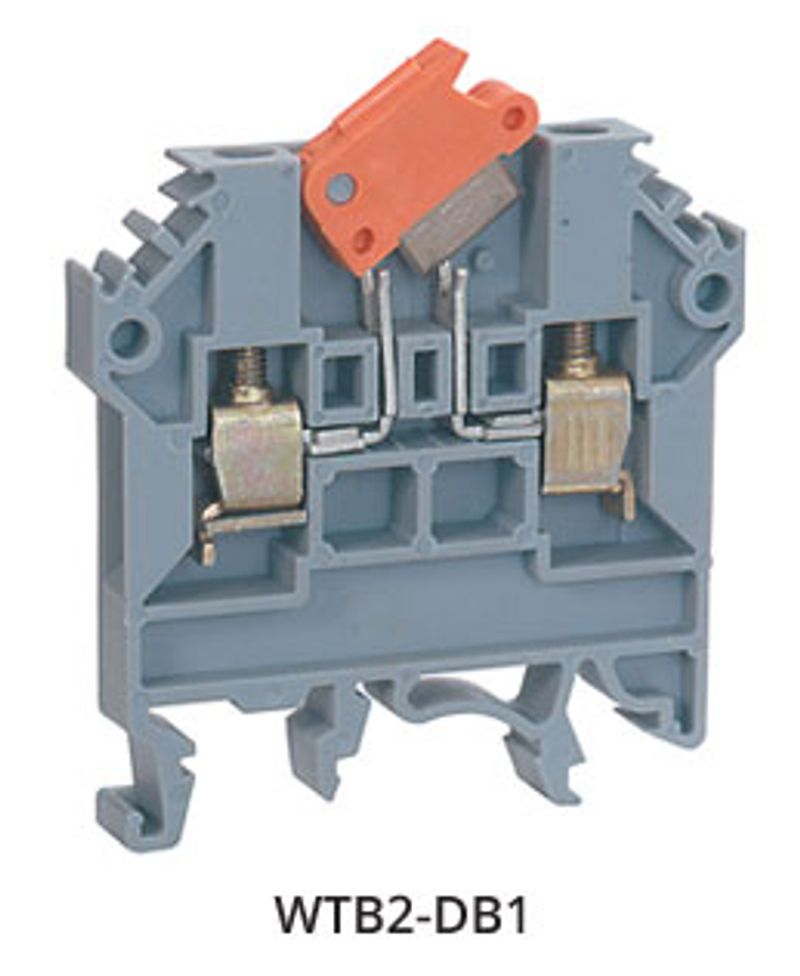
1. Disconnect Blocks make it easy to disconnect a circuit using a knife switch without having to remove any wires. Switch block is another name they're known as.
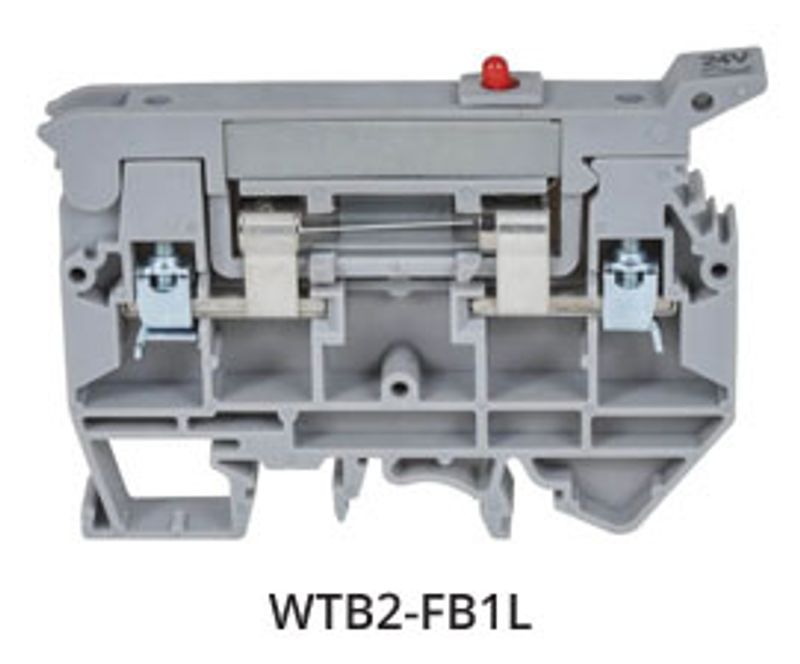
2. Fuse Holders help connect numerous devices together that use several fuses. Only the wiring sections connected to the fuse holder are affected if a short circuit happens.
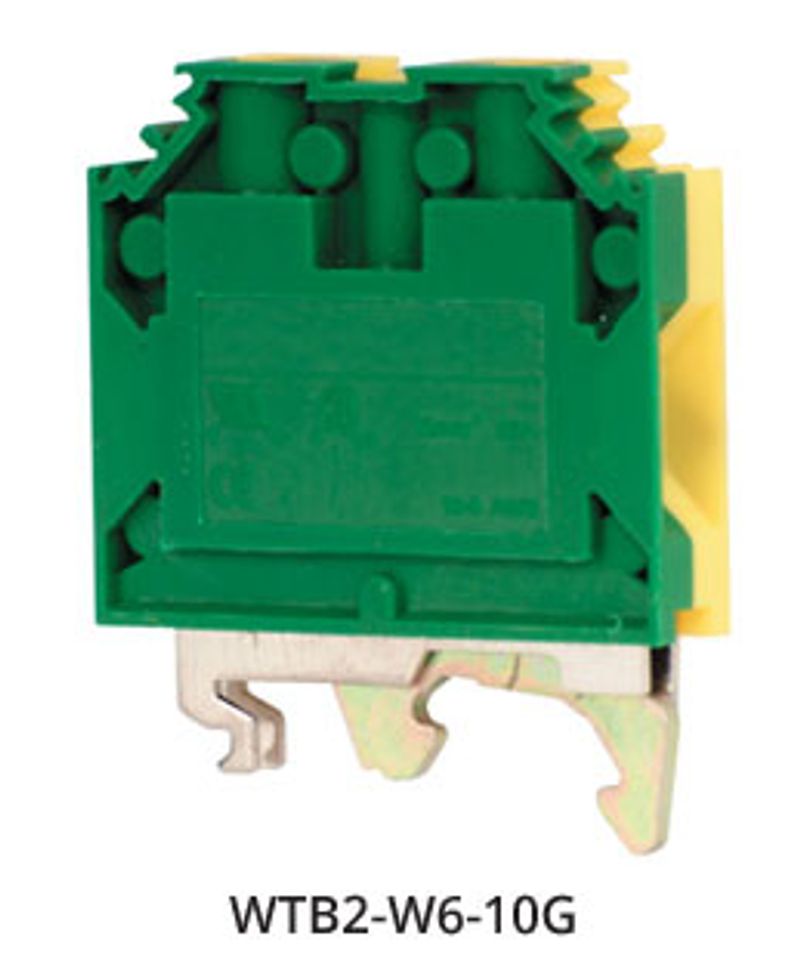
3. Ground Circuit Terminals ground systems or components. They can be inserted into a block and are usually interchangeable with standard terminal blocks.
4. I/O Blocks allow devices and controllers to communicate with one another.
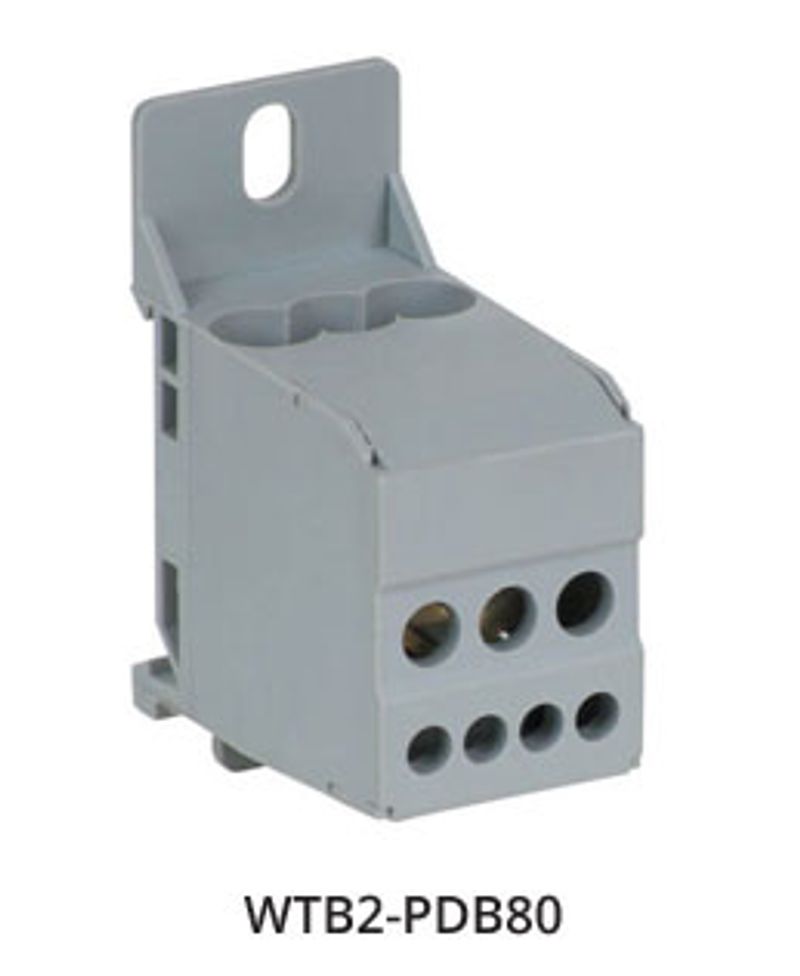
5. Power Distribution Blocks terminate power cables.
6. Sensor/Actuator Blocks are used to handle devices such as photoelectronic sensors and proximity sensors that have three or four wires.
7. Thermocouple Blocks connect thermocouples. They also provide consistent metal connections which measure temperature.
Structure Types
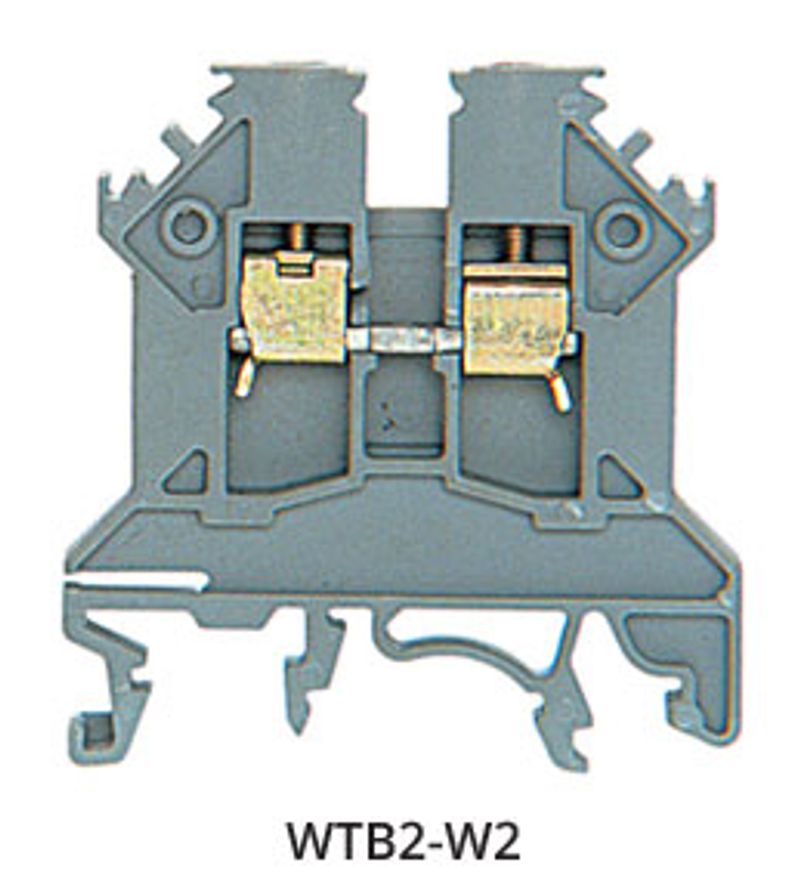
1. Single Feed Through
The most basic type of terminal block is single feed products. These are used for wire-to-wire
connection.
Single feed terminal blocks have one output and one input contact. The two separate wires are fed into either side of the terminal block. Then they're connected within its housing.
2. Dual Level
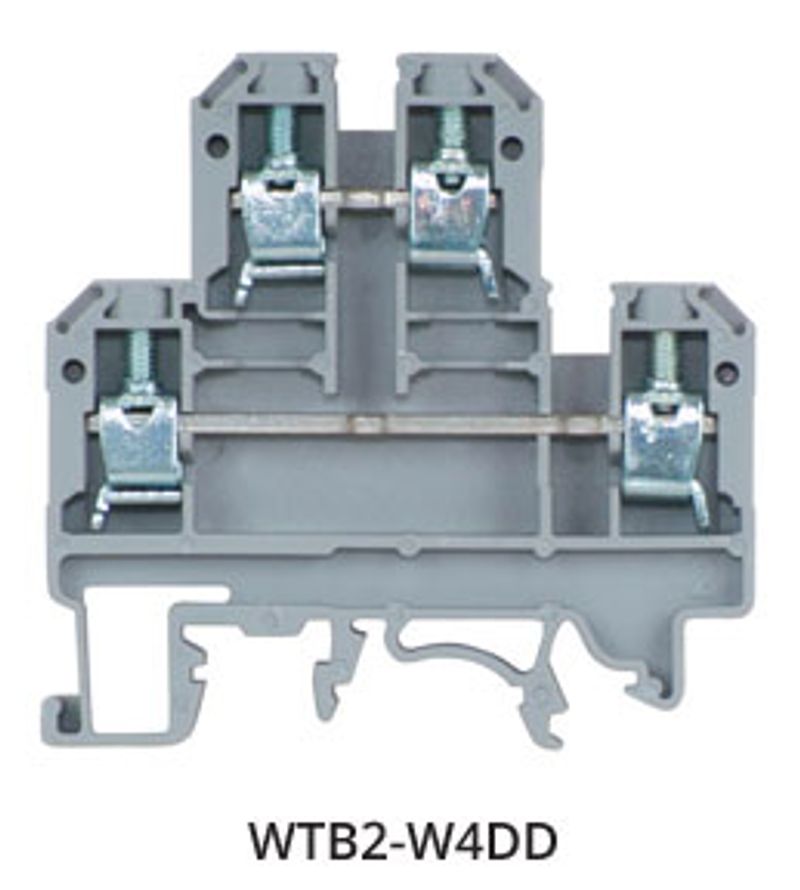
Dual level terminal blocks use two levels of contacts. This helps simplify wiring and save space.
Often, multi-level products use a bridge to connect one contact level to another. This increases circuit flexibility.
3. Three Level
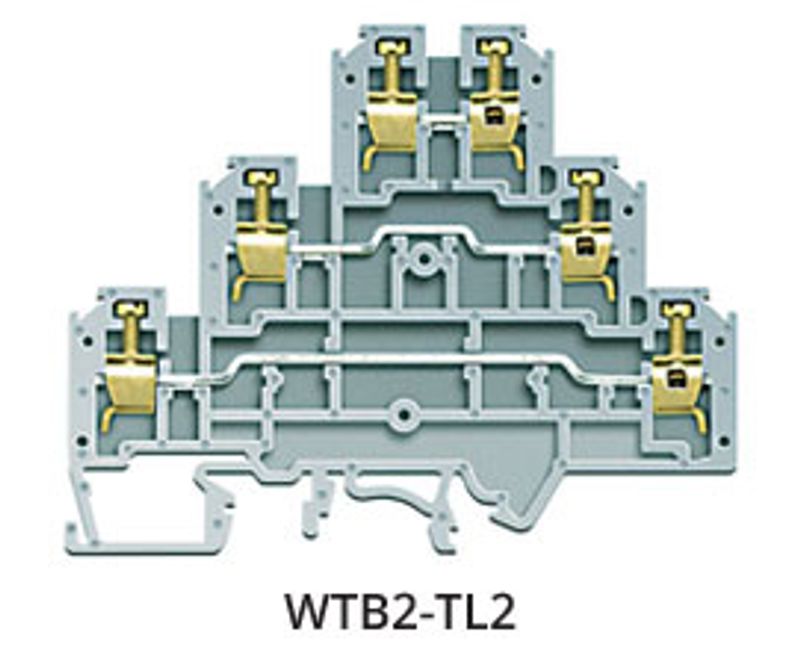
Level three terminal blocks are the same as dual level products, but with an extra stacked level of contacts. And like dual level terminal blocks, they can be bridged.
4. High Density Terminal Blocks
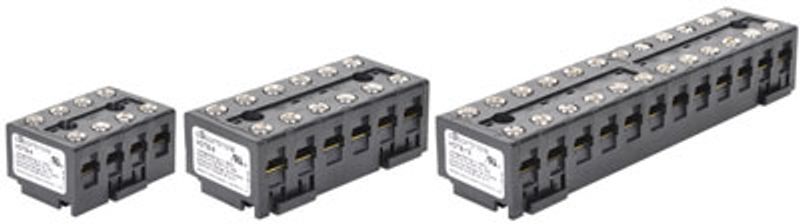
High Density Terminal Blocks are designed with the OEM in mind. They are simple to install and the large marking strips can be hand marked or custom printed to provide quick and accurate identification of the terminals.
Terminal Block Features
Some terminal blocks include one or more special features.
Pluggable Terminal Blocks
With pluggable terminal blocks, the wire connections allow the circuit to be broken without the following:
Enabling quick disconnection
Unwiring
Testing
Maintenance
By combining pluggable terminal blocks in a certain manner, it's possible to disconnect power to an entire group of terminals at once by simply removing a single plug.
Stackable Terminal Blocks
To save space, stackable terminal blocks can be mounted next to each other. Typically, they are DIN rail mounted devices.
Indicator Light
Some terminal blocks feature an indicator light. This light-emitting diode (LED) verifies that the current is flowing through the device.
Diode
Terminal blocks with diodes between circuits allow for lamp testing. They also provide protection against reverse polarity.
Orientation and Specifications
Terminal blocks commonly come in three different wire entry angles:
45°
90° (horizontal)
180° (vertical)
How the wire is attached to the block is known as contact, position, way or pole. When purchasing terminal blocks, it's important to know the number of contacts in order to match the number with the number of wires necessary for application.
Contact pitch relates directly to the number of contacts and is expressed in millimeters. It's the distance between each contact measured from the center of each opening or hole.
Installation Guidelines for a Screw-In Terminal Block
Once you know the exact terminal block type and have purchased it, it's time to install it. Turn off any electrical equipment prior to installation for safety reasons.
If you have a screw-in terminal block, strip a small amount of insulation from the end of the terminal block wiring. Typically, one inch works fine but may depend on the component being used.
Unscrew the retaining screw from the terminal block. Then insert the wire into the hole.
Take Care to Fully Tighten the Screw
Carefully tighten the screw into place. It's important to fully tighten the wire because if not, the wire will heat up and melt the insulation. That could cause a fire.
Secure Plug-In Connection
Once you've positioned the terminal block, run the electrical wires to it. Then connect the male terminal to the female port.
Next, press firmly to ensure a secure connection that won't come loose due to movement.
Test Equipment for Safety
After making all the connections to the terminal blocks, it's time to test the equipment to ensure it's working correctly. It's extremely important to test everything to make sure everyone is working in a safe environment.
Don't forget to check the terminal block as well as the connections to ensure there's no excessive heat being built up.
Check the wires to make sure they're still securely in place.
Mounting Terminal Blocks
Most terminal blocks are either screwed into a panel, snapped onto a metal rail or mounted on a printed circuit board.
Rail
Terminal blocks that are mounted are usually done on some form of a DIN rail (Deutsches Institut fur Normung). DIN is the German standards body that originally published rail specifications.
Terminal blocks are manufactured to fit in one of several DIN rail sizes such as:
1. Miniature Top-Hat Rails
Miniature top-hat rails are 15 mm wide. They are rated to 300V.
2. G32 Rails
As their name suggests, these rails are shaped like the letter 'G' and are 32 mm wide. They can handle terminal blocks rated to 60V.
3. Top-Hat Rails
Top-hat rails look exactly like their miniature version except they are 35 mm wide. They're rated to 600V.
4. PCB Mount
There are also terminal blocks which are manufactured for mounting on printed circuit boards. Some products can be plugged into a pin strip which is mounted to the board.
Others have integral pins for mounting through the circuit board. These are also known as electronic blocks.
Method Options to Achieve Wire Connection
There are several different methods to choose from to achieve wire connection using terminal blocks.
Insulation Displacement Connections (IDC)
Insulation displacement connections allow connections to be made by pushing the wire between two sharp pieces of metal. This makes the connection without exposing any bare wire.
Screw Clamps
Screw clamps make an electrical connection by using a screw to tighten the wire. They are the industry standard in termination methods.
Screw clamps are able to accommodate wide ranges of wire sizes. They also provide reliable connections.
Spring Clamps
Spring clamps retain wire clamping by using the force of the spring. They're a new alternative to screw clamps.
Spring clamps are most useful in applications where there are limited working space and small wire diameters to take into consideration.
Tab Connections
Tab connections are also known as blade or spade terminals. They were designed to be inserted and removed quickly without any need for soldering.
Applications for Terminal Blocks in Industrial Settings
Terminal blocks are commonly used in industrial equipment such as wired support boxes and control boxes. It's common to see terminal blocks in the following types of equipment used in industrial settings:
Blowers
Control panels
Electrical substations
Energy efficient lighting (LED)
LED municipal outdoor and street lighting
All Electrical Machinery
Refrigeration control
Variable speed/frequency drivers
Anywhere power is distributed!
Which type of terminal block you require depends on a few factors.
Since there are several types of terminal blocks available, it's vital to know which one is the right choice before installation.
Current Requirement
The current requirement is the most important thing to consider when choosing which type of terminal block to use. That's because if too much current is pushed through a terminal block, it can overheat and destroy the terminal block.
Make sure the terminal block can handle the expected use of the current and then add 50% more just to be safe.
Voltage Requirements
Taking the voltage amount into consideration is also important. Otherwise, the voltage can cause problems with dielectric breakdown.
The voltage may be too high for the terminal block and cause current leakage between terminal blocks that are located in close proximity. Be aware that high voltage requirements are rare in design.
Most of the time, voltage considerations are ignored for voltages under 100V. Despite this, it's still a good idea to check the voltage prior to choosing a terminal block.
Wire Being Used
Wires are not made equally. Each wire type comes with its own set of advantages and disadvantages.
Make sure when choosing a terminal block for a cable to know the size of the cable. It needs to physically fit into the terminal block.
Find out if it's a single-core or multi-core because multi-core wires work better with screw terminals. Meanwhile, single-core wires work better with push-fit connectors.
Environmental and Mechanical Strength
Consider the environment when choosing a terminal block. Some terminal blocks are made to be mechanically strong. They can handle high currents.
However, if the connection is used in naval environments, the salt air can corrode the metal contacts.
What environment the terminal block is used in can create wide temperate swings and/or contain mechanical vibrations. If that happens, the screw terminations can become unreliable.