

The history of screws is a fascinating journey that spans thousands of years, evolving from simple tools to highly specialized components used in countless industries today. As a leading screws supplier, I've witnessed firsthand the remarkable transformation of these unassuming fasteners. In this blog, we'll delve into the rich history of screws, exploring their origins, development, and the pivotal role they play in modern society.
Ancient Origins
The concept of the screw dates back to ancient times, with the earliest known examples appearing around 400 BC. The ancient Greeks are credited with inventing the screw as a mechanical device, primarily for use in water-lifting and pressing applications. Archimedes, the renowned Greek mathematician and inventor, is often associated with the development of the Archimedes' screw, a helical pump used to raise water from a lower to a higher level. This ingenious invention consisted of a large screw-shaped blade enclosed in a cylinder, which could be turned by hand or a water wheel to move water efficiently.
In addition to water-lifting, screws were also used in ancient times for pressing grapes and olives to extract juice and oil. These early screws were typically made of wood or bronze and were operated manually, requiring significant physical effort to turn. Despite their primitive design, these early screws laid the foundation for the development of more sophisticated fastening devices in the centuries to come.
Medieval and Renaissance Innovations
During the Middle Ages, the use of screws expanded beyond water-lifting and pressing applications to include a variety of other industries, such as carpentry, metalworking, and clockmaking. Craftsmen began to experiment with different materials and manufacturing techniques to improve the strength and durability of screws, leading to the development of the first metal screws.
One of the most significant advancements in screw technology during the Renaissance was the invention of the screw-cutting lathe by Jacques Besson in the 16th century. This revolutionary machine allowed for the precise cutting of screw threads, making it possible to produce screws with consistent dimensions and high-quality threads. The screw-cutting lathe also enabled the mass production of screws, making them more affordable and accessible to a wider range of industries.
Another important development during the Renaissance was the introduction of the socket screw, which features a recessed socket in the head that allows for the use of a special tool, such as an Allen wrench, to tighten or loosen the screw. Socket screws are commonly used in applications where a flush or low-profile fastening is required, such as in machinery, electronics, and automotive components.
Industrial Revolution and Mass Production
The Industrial Revolution in the 18th and 19th centuries brought about a period of rapid technological advancement and mass production, which had a profound impact on the screw industry. The development of steam power and the introduction of new manufacturing processes, such as the use of interchangeable parts, made it possible to produce screws more efficiently and at a lower cost.
One of the most significant innovations during the Industrial Revolution was the invention of the self-tapping screw by Joseph Whitworth in 1841. Self-tapping screws are designed to cut their own threads as they are driven into a material, eliminating the need for pre-drilling a hole. This made it possible to fasten materials more quickly and easily, reducing assembly time and labor costs.
The Industrial Revolution also saw the development of a wide range of specialized screws for different applications, such as machine screws, wood screws, and sheet metal screws. These screws were designed to meet the specific requirements of different industries, offering improved performance, reliability, and durability.

Modern Screw Technology
In the 20th and 21st centuries, screw technology has continued to evolve at a rapid pace, driven by advancements in materials science, manufacturing processes, and design techniques. Today, screws are available in a wide range of materials, including stainless steel, titanium, aluminum, and plastic, each offering unique properties and advantages for different applications.
One of the most significant trends in modern screw technology is the development of high-strength and corrosion-resistant screws. These screws are designed to withstand extreme conditions, such as high temperatures, high pressures, and corrosive environments, making them ideal for use in aerospace, automotive, and marine applications.
Another important development in modern screw technology is the use of advanced coatings and surface treatments to improve the performance and durability of screws. Coatings such as zinc plating, nickel plating, and black oxide can provide protection against corrosion, wear, and friction, extending the lifespan of the screw and reducing maintenance costs.
Types of Screws and Their Applications
As a screws supplier, we offer a wide range of screws to meet the diverse needs of our customers. Here are some of the most common types of screws and their applications:
- Stainless Steel DIN927 Headless Slotted Shoulder Screw: These screws are commonly used in applications where a low-profile and flush fastening is required, such as in machinery, electronics, and automotive components. The headless design and slotted shoulder provide a secure and stable connection, while the stainless steel construction offers excellent corrosion resistance. Stainless Steel DIN927 Headless Slotted Shoulder Screw
- Hexagon Socket Button Head Screw: These screws feature a hexagonal socket in the head and a rounded button head, providing a smooth and flush finish. They are commonly used in applications where a high-strength and secure fastening is required, such as in machinery, automotive, and aerospace components. Hexagon Socket Button Head Screw
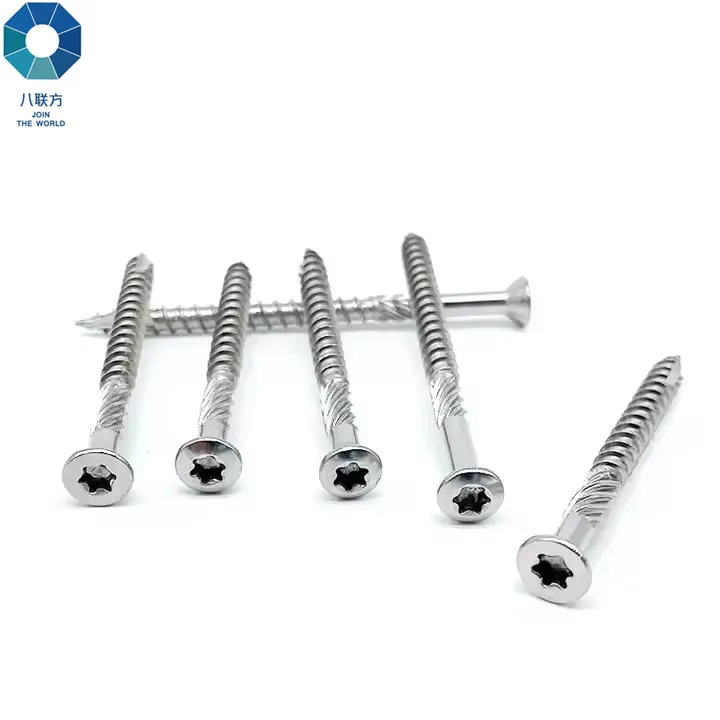
- Deck Screws: These screws are specifically designed for use in decking applications, providing a strong and durable connection between the deck boards and the joists. They are typically made of stainless steel or coated with a corrosion-resistant finish to prevent rust and decay. Deck Screws
Conclusion
The history of screws is a testament to human ingenuity and innovation. From their humble beginnings as simple water-lifting devices to their current status as essential components in modern technology, screws have come a long way over the centuries. As a screws supplier, we are proud to be part of this rich history and are committed to providing our customers with the highest quality screws and exceptional customer service.
If you're in the market for screws for your next project, we invite you to contact us to discuss your specific requirements. Our team of experts will be happy to help you select the right screws for your application and provide you with a competitive quote. Let's work together to find the perfect fastening solution for your needs.
References
- Cardew, G. H. (1967). A History of the Machine Tool Industry. MIT Press.
- Forbes, R. J. (1964). Studies in Ancient Technology. E. J. Brill.
- Hall, A. R. (1954). Ballistics in the Seventeenth Century: A Study in the Relations of Science and War with Reference Principally to England. Cambridge University Press.