

When it comes to the world of fasteners, screws are an indispensable component, used in a wide variety of applications across numerous industries. Among the vast array of screws available in the market, machine screws and wood screws stand out as two of the most commonly used types. As a screws supplier, I often encounter customers who are confused about the differences between these two types of screws. In this blog post, I will delve into the key distinctions between machine screws and wood screws, helping you make an informed decision when selecting the right screw for your project.
Design and Structure
One of the most obvious differences between machine screws and wood screws lies in their design and structure. Machine screws are typically designed to be used with nuts or threaded holes in metal, plastic, or other hard materials. They have a uniform diameter along the entire length of the screw, with a threaded shaft that extends from the head to the tip. The heads of machine screws come in a variety of shapes, including flat, round, pan, and oval, each designed for specific applications. For example, flat head machine screws are commonly used when a flush surface is required, while round head machine screws are ideal for applications where a raised head is needed for easy gripping.
On the other hand, wood screws are specifically designed for use in wood or other soft materials. They have a tapered shaft that gradually decreases in diameter from the head to the tip, which helps the screw to penetrate the wood more easily and provides a better grip. The threads of wood screws are typically coarser and deeper than those of machine screws, allowing them to bite into the wood fibers and hold the material securely. Wood screws also come in a variety of head shapes, including flat, round, and oval, but they are often used with a countersunk hole to create a flush surface.
Thread Type and Pitch
Another important difference between machine screws and wood screws is the type and pitch of their threads. Machine screws typically have a fine thread pitch, which means that the threads are closer together and the screw requires more turns to advance a given distance. Fine thread machine screws are commonly used in applications where a high degree of precision is required, such as in electronics, machinery, and automotive industries. They provide a stronger and more secure connection than coarse thread screws, but they are also more prone to stripping if over-tightened.
Wood screws, on the other hand, have a coarse thread pitch, which means that the threads are farther apart and the screw requires fewer turns to advance a given distance. Coarse thread wood screws are ideal for use in wood or other soft materials, as they can quickly and easily penetrate the material and provide a strong grip. They are less likely to strip than fine thread screws, but they may not provide as strong a connection in hard materials.
Material and Finish
The materials and finishes used in machine screws and wood screws also differ significantly. Machine screws are typically made from high-strength materials such as steel, stainless steel, or brass, which provide excellent durability and corrosion resistance. They are often coated with a finish such as zinc plating, nickel plating, or black oxide to further enhance their corrosion resistance and appearance.
Wood screws, on the other hand, are typically made from softer materials such as steel or brass, which are easier to drive into wood without splitting the material. They are often coated with a finish such as phosphate or black oxide to prevent rust and corrosion, but they may not require the same level of corrosion resistance as machine screws.
Applications
The differences in design, thread type, and material between machine screws and wood screws also make them suitable for different applications. Machine screws are commonly used in applications where a high degree of precision and strength is required, such as in electronics, machinery, and automotive industries. They are often used to fasten metal parts together, or to attach components to a threaded hole in a metal or plastic surface. For example, machine screws are commonly used to secure circuit boards, motors, and other electronic components in place.
Wood screws, on the other hand, are specifically designed for use in wood or other soft materials. They are commonly used in construction, woodworking, and furniture making applications, where they are used to fasten wood parts together or to attach hardware to a wooden surface. For example, wood screws are commonly used to build cabinets, tables, chairs, and other furniture pieces.
Examples of Our Products
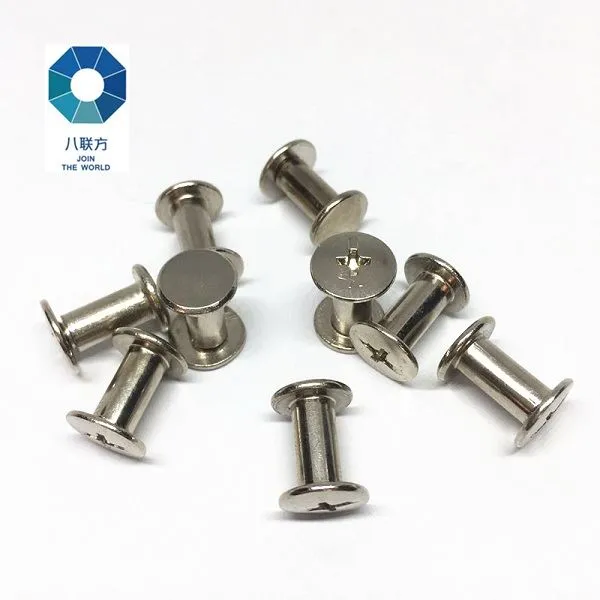
As a screws supplier, we offer a wide range of machine screws and wood screws to meet the needs of our customers. Some of our popular products include the Standard M5 Chicago Screw, which is a high-quality machine screw that is commonly used in binding applications, and the DIN927 Slotted Shoulder Screw, which is a precision machine screw that is ideal for use in machinery and automotive applications. We also offer the Stainless Steel DIN927 Headless Slotted Shoulder Screw, which is a corrosion-resistant machine screw that is commonly used in marine and outdoor applications.

Conclusion
In conclusion, machine screws and wood screws are two distinct types of screws that are designed for different applications. Machine screws are typically used in applications where a high degree of precision and strength is required, while wood screws are specifically designed for use in wood or other soft materials. By understanding the differences between these two types of screws, you can make an informed decision when selecting the right screw for your project.
If you have any questions about our products or need help selecting the right screw for your application, please don't hesitate to contact us. Our team of experts is always available to provide you with the information and support you need to make the right choice. We look forward to working with you and helping you find the perfect screws for your project.
References
- Machinery's Handbook, 31st Edition
- Fastener Technology Handbook, Second Edition
- Woodworking Magazine