

Hey there! If you're into DIY projects or running a business that involves assembling stuff, you've probably asked yourself, "How many screws do I need for a particular job?" Well, you're in the right place. I'm from a screws supplier, and I'm gonna share some tips to help you figure this out.
First things first, let's talk about why getting the right number of screws is so important. Using too few screws can make your structure weak and unstable. For example, if you're building a bookshelf and skimp on the screws, it might wobble or even fall apart over time. On the other hand, using too many is a waste of money and can also slow down your project. You don't wanna be stuck adding extra screws when you could be done and enjoying your finished work.
Now, let's dive into how to calculate the number of screws you need. There are a few factors you gotta consider.
1. The Type of Project
The nature of your project plays a huge role. Are you building furniture, like a table or a chair? Or maybe you're working on a construction project, like putting up a shed or a deck. Different projects have different screw requirements.
For simple furniture, you might only need a few screws per joint. For instance, a basic wooden chair might need 2 - 3 screws at each leg joint. But if you're building a deck, you'll need to use screws along the edges and at regular intervals to attach the deck boards to the joists. You might be looking at using a screw every 12 - 16 inches, depending on the size of the boards.
2. The Material You're Using
The material also affects how many screws you need. If you're working with softwood, like pine, the wood is more forgiving and you might not need as many screws as you would with hardwood, like oak. Hardwood is denser and stronger, but it can also be more brittle. So, you need to use more screws to ensure a solid connection.
When it comes to metal, screws need to be spaced carefully to prevent the metal from warping or cracking. You'll usually follow the manufacturer's guidelines for the specific metal you're using.
3. The Size of the Screws
The size of the screws matters too. Larger screws can hold more weight and provide a stronger connection, so you might need fewer of them. Smaller screws, on the other hand, are better for delicate work but you might need more of them to achieve the same level of strength.
Let's take a look at some common scenarios and how to calculate the number of screws.
Building a Wooden Cabinet
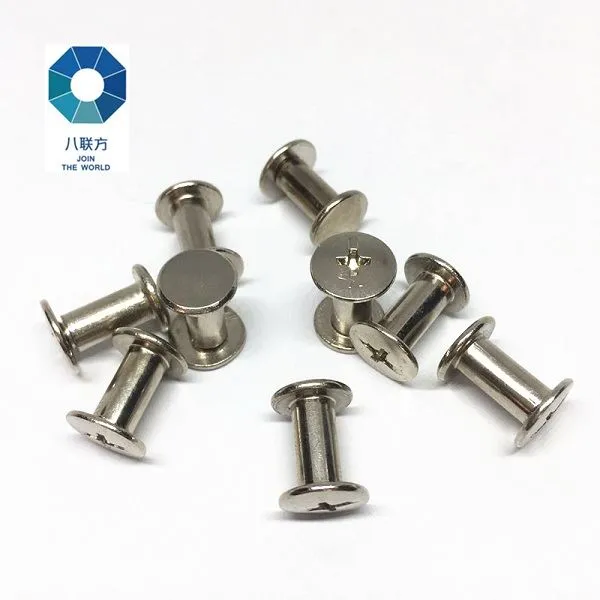
If you're building a wooden cabinet, you'll need screws to attach the sides, top, and bottom. For a standard cabinet, you might use Standard M5 Chicago Screw. You'll need about 4 - 6 screws at each corner joint to ensure a strong connection. If your cabinet has shelves, you'll also need to attach them to the sides. You might use 2 - 3 screws per shelf end for smaller shelves and 4 - 5 for larger ones.
Installing a Deck
For a deck, you'll need to use Crossed Pan Flanged Head Screw. First, measure the length of the deck boards and the spacing between the joists. If you're using 12 - inch joist spacing, you'll need to place a screw every 12 inches along the length of the board. If your joist spacing is 16 inches, you'll need to adjust accordingly. Don't forget to add extra screws at the edges of the deck for added stability.
Sealing a Container
If you're sealing a container, you might use Brass Type Material Drilled Head Sealing Screw. The number of screws depends on the size of the container. For a small container, you might only need 4 - 6 screws around the perimeter. For a larger container, you'll need to space the screws evenly to ensure a good seal.
Here's a rough formula you can use as a starting point:

Number of screws = (Number of joints x Screws per joint) + (Length of boards x Screws per linear foot)
This formula takes into account both the joints in your project and the length of the boards you're using. But remember, it's just a guide. You'll still need to adjust based on the factors we talked about earlier.
Another tip is to always buy a few extra screws. It's better to have some spares on hand in case you make a mistake or need to replace a screw later on. A good rule of thumb is to buy 10 - 15% more screws than you think you'll need.
I hope this has given you a better idea of how to figure out how many screws you need for a particular job. If you have any questions or need more specific advice, don't hesitate to reach out. We're here to help you with all your screw needs. Whether you're a DIY enthusiast or a professional contractor, we've got the right screws for you. Just hit us up, and let's start your next project off on the right foot!
References
- Woodworking Association Handbook
- Construction Industry Standards Manual