

Hey there! As a screws supplier, I often get asked if it's possible to convert between metric and imperial screw sizes. It's a question that comes up a lot, especially when dealing with international projects or when you've got a mix of tools and materials from different parts of the world. So, let's dive into this topic and see if we can clear up some of the confusion.
First off, what are metric and imperial screw sizes? Metric screw sizes are based on the metric system, which uses millimeters (mm) to measure things like the diameter, pitch, and length of a screw. On the other hand, imperial screw sizes are part of the imperial system, which uses inches and fractions of an inch. For example, a metric screw might be labeled as M5 x 0.8, where M5 means the diameter is 5 mm and 0.8 is the pitch (the distance between the threads). An imperial screw, though, could be something like #8 - 32, where the #8 refers to the diameter and 32 is the number of threads per inch.
Now, can you convert between these two systems? The short answer is yes, but it's not always straightforward. One of the main challenges is that the metric and imperial systems have different standards for how they measure screws. For instance, the thread profiles (the shape of the threads) can vary between the two systems. Metric threads typically have a 60 - degree angle, while some imperial threads might have a different angle. This can affect how well a screw fits into a threaded hole or nut, even if the sizes seem to match after conversion.
Let's talk about converting the diameter first. To convert from inches to millimeters, you multiply the inch measurement by 25.4. So, if you have an imperial screw with a diameter of 1/4 inch, you'd calculate 1/4 * 25.4 = 6.35 mm. However, in the real world of screws, you can't always find an exact metric equivalent. You might have to choose the closest size available. For example, there's no M6.35 screw, so you'd probably go with an M6 or M6.5 screw, depending on your application.

When it comes to pitch, converting between metric and imperial is a bit more complicated. In the metric system, pitch is measured in millimeters, while in the imperial system, it's the number of threads per inch. To convert from threads per inch to pitch in millimeters, you use the formula: pitch (mm) = 25.4 / threads per inch. For example, if you have an imperial screw with 20 threads per inch, the pitch would be 25.4 / 20 = 1.27 mm. Again, finding an exact metric match might be difficult, and you'll have to choose the closest option.
Another thing to consider is the length of the screw. Converting the length from inches to millimeters is as simple as multiplying by 25.4. But just like with diameter and pitch, you might not find an exact match in the other system. You'll need to decide if the closest available size will work for your project.
Now, let's look at some of our products and how these conversion issues might come up. Take our Energy Meter Sealing Bolt Screw. This screw is designed for a specific application, and using the wrong size, whether due to a conversion error or not, could lead to problems with the energy meter's sealing. If you're used to imperial sizes and need to switch to metric for this product, you have to be extra careful with the conversion.
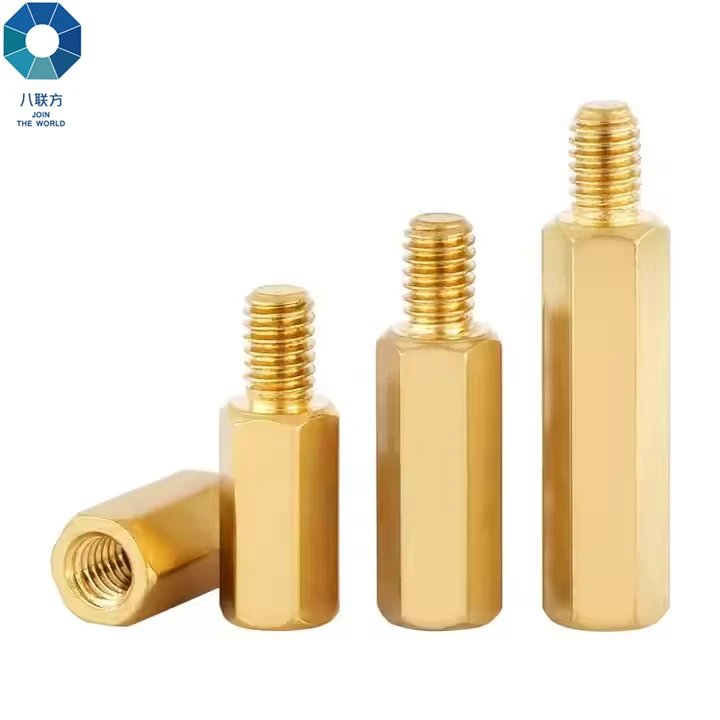
Our Brass Hex Standoff Screw is another example. These standoff screws are used to create a specific distance between two components. If you convert the size incorrectly, the standoff might not be the right height, which could affect the overall functionality of the assembly.
And then there's our Slot Head Machine Screw. These screws are commonly used in a variety of applications, and getting the size right is crucial. Whether you're converting from metric to imperial or vice versa, any mistakes in the conversion can lead to a poor fit, which might cause the screw to loosen over time or not hold the parts together properly.
In some cases, it might be better to avoid conversion altogether. If you're working on a project that involves a lot of screws, it's often easier to stick with one system throughout. This reduces the chances of errors and makes it easier to source the right parts. However, if you have no choice but to convert, make sure you double - check your calculations and test the fit of the screws before finalizing your project.
As a screws supplier, we understand that dealing with metric and imperial screw sizes can be a headache. That's why we offer a wide range of screws in both metric and imperial sizes. We can also provide you with detailed specifications and advice on which screw is the best fit for your project. Whether you're a DIY enthusiast working on a home project or a professional in the manufacturing industry, we've got the screws you need.
If you're interested in our products or have any questions about screw sizes, conversions, or anything else related to screws, don't hesitate to reach out. We're here to help you find the right solutions for your needs. Contact us today to start a discussion about your screw requirements and let's work together to get your project on track.
References
- Machinery's Handbook, 31st Edition. This comprehensive reference book provides detailed information on screw sizes, thread profiles, and conversion factors between metric and imperial systems.
- Engineering Design Data on Fasteners. Various engineering design handbooks and databases that offer in - depth knowledge about different types of screws and their dimensional standards.